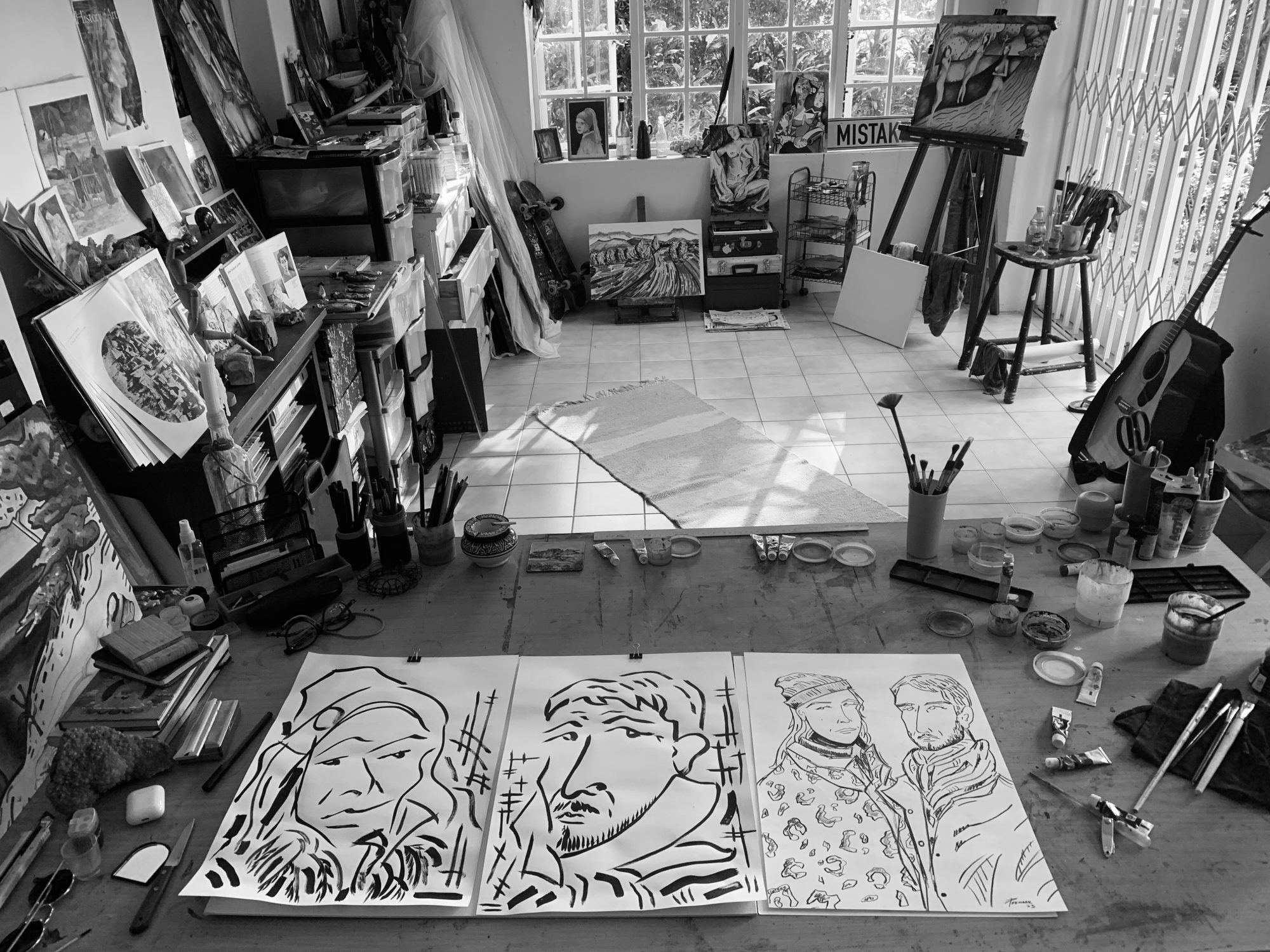
There is a tendency to think that a painting begins with a blank canvas.
It does not.
A painting begins much earlier, often without notice.
It begins with something that refuses to let go.
Sometimes it is a landscape seen from a passing car. Sometimes the changing light across a familiar hillside. A room visited countless times. A face remembered years later. An ordinary object that continues to suggest more than it first revealed.
Most of these moments are small. Many disappear almost immediately. A few remain.
Those are the ones worth returning to.
For me, painting is less about invention than attention. It is a way of staying with something long enough for it to become unfamiliar again. The longer a subject is observed, the less certain it becomes. Details give way to relationships. Objects become shapes. Colour begins to carry as much meaning as the thing it describes. Gradually the painting moves away from the subject that first inspired it.
This is not a rejection of observation.
Observation begins the process.
It simply does not finish it.
Memory enters. Time enters. Experience enters. What seemed obvious begins to shift. A place becomes more than a location. A portrait becomes more than a likeness. The painting begins to discover something that could not have been found through looking alone.
That is why I rarely think of a finished painting as a record.
A camera records.
A painting transforms.
The finished work is not the transformation itself.
It is what remains of it.
This way of working owes a great deal to painters who understood that painting has its own language. Cézanne did not paint mountains because he wished to describe geology. Picasso did not dismantle form simply to appear modern. Each understood that a painting could reveal relationships that ordinary perception often overlooks. Their work reminds us that painting is not a substitute for seeing. It is another way of seeing.
That idea extends beyond art.
We often believe we understand something because we have looked at it once. Yet understanding rarely arrives so quickly. It grows through returning, questioning and paying closer attention. A place changes. A person changes. An idea changes. More often than not, it is our own way of seeing that has changed.
Perhaps that is why painting continues to matter.
In a world that rewards speed, painting insists on slowness.
In a culture of endless images, it asks us to remain with one.
Attention is no longer simply a way of making art.
It has become a way of understanding the world.
And every painting begins there.